Understanding Tractor Tire Sizes: A Foundation for Efficient Farming
Knowing how to accurately measure your tractor tires is crucial for optimizing fuel efficiency, minimizing soil compaction, and extending tire lifespan. Incorrect measurements lead to increased fuel consumption (potentially 15-20% higher!), premature tire wear, and reduced traction – all impacting your bottom line and environmental footprint. This guide provides a clear, step-by-step process for measuring tractor tires using both imperial and metric systems, addressing common challenges. The right tire size is essential for sustainable and efficient farming. For more information on John Deere tractor tires, check out this helpful resource.
Decoding the Tire's Sidewall: Your First Step
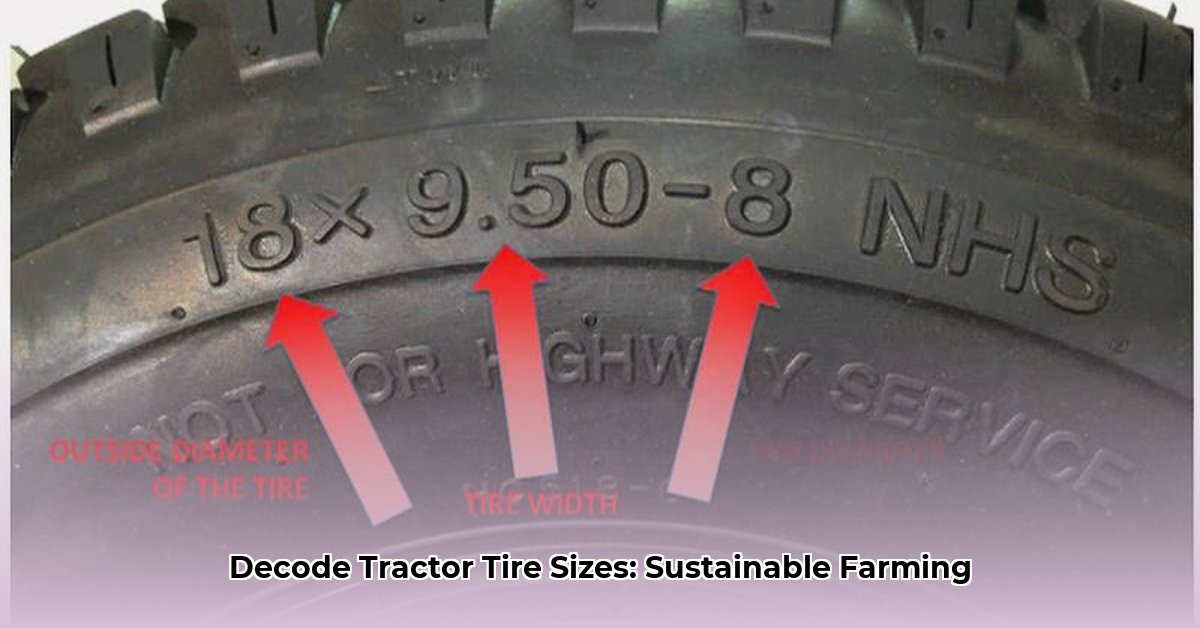
The sidewall of your tractor tire typically contains the essential size information. This includes the section width, aspect ratio, and rim diameter. However, age, wear, and damage can often render these markings illegible. Don't worry; if the markings are unclear we'll show you how to measure the tire directly.
Measuring Tractor Tires: A Step-by-Step Guide
If the sidewall markings are difficult to read or missing, follow these steps for accurate measurements. You'll need a flexible tape measure and, for precise measurements, a pair of calipers.
Section Width: Locate the widest point of the tire's tread (the part that contacts the ground). Measure across this point. This is your section width. Think of this as the tire’s overall width.
Overall Diameter: Measure the tire's diameter from the bottom (where it touches the ground) to the very top of the tire. This measurement is crucial for determining the overall size.
Rim Diameter: The rim is the metal wheel inside the tire. Its diameter is often stamped on the rim itself (usually inside). If the markings are unreadable, consult your tractor's manual; the correct rim diameter will be listed there.
Aspect Ratio (If Visible): The sidewall may display the aspect ratio (e.g., 85/100). This indicates the tire's height relative to its width. While helpful, it isn't required for measuring the tire itself.
Tire Construction (If Visible): Note whether the tire is radial or bias ply. This information is vital for tire replacement and maintenance.
Imperial vs. Metric: Understanding the Measurement Systems
Tractor tire sizes use both imperial (inches) and metric (millimeters) systems. Understanding both is key to avoiding confusion.
Imperial System (Inches): Typically expressed as "X-Y," where X represents the section width in inches and Y represents the rim diameter in inches (e.g., 14.9-24).
Metric System (Millimeters): Often expressed as "XXX/YYR-Z," where XXX is the section width in millimeters, YY is the aspect ratio (percentage of the section width), R denotes radial construction, and Z is the rim diameter in inches (e.g., 380/85R24). Note the use of both millimeters and inches in certain metric expressions.
Inconsistent units and conversions can introduce errors. Always double-check your measurements and utilize conversion tools for accuracy.
Converting Between Imperial and Metric: A Necessary Skill
Conversion between imperial and metric systems is essential when comparing parts from different manufacturers or references. Many online conversion tools provide accurate conversion calculations. Remember: 1 inch equals 25.4 millimeters. Accurate conversions are essential to prevent costly mistakes.
Why Accurate Measurements Matter: The Bottom Line
Precise tire measurements are not just about numbers; they directly impact your farm's efficiency and profitability. Inaccurate measurements lead to:
Increased Fuel Consumption: Incorrect tire sizes increase rolling resistance, directly impacting fuel use. Dr. Anya Sharma, Agricultural Engineering Professor at Purdue University, states, "Even small discrepancies in tire size significantly affect fuel efficiency, resulting in avoidable costs and environmental impact."
Reduced Traction: Improperly sized tires reduce grip, particularly in wet conditions, impacting productivity and potentially damaging the soil.
Premature Tire Wear: Mismatched or incorrectly sized tires wear unevenly, shortening their lifespan and necessitating costly replacements.
Potential Drivetrain Damage: Incorrect sizes strain the drivetrain and can lead to major repairs.
Tire Pressure: A Critical Factor Influencing Measurements
Maintaining proper tire pressure is crucial for optimal performance and accurate measurements. Under-inflation increases the tire's footprint, increasing soil compaction and fuel use. Conversely, over-inflation reduces the footprint, impacting traction and possibly causing tire damage. Always consult your tractor's manual for the recommended tire pressure.
Selecting the Right Tires: Beyond Size
While accurate measurement is vital, tire selection considers other factors:
Load Index: Indicates the maximum weight a tire can safely carry.
Speed Rating: Specifies the tire's safe maximum speed.
Ply Rating: Reflects the tire's construction and strength.
By meticulously measuring your tires and considering these additional factors, you'll ensure your tractor operates efficiently, sustainably, and profitably. Investing time in accurate measurement saves money and prevents headaches down the line.